Citation: International Journal of Surgery. 2022 Jul 13, 104, 106766. Online ahead of print
Author: Islam Omar, Karl Miller, Brijesh Madhok, Bassem Amr, Rishi Singhal, Yitka Graham, Sjaak Pouwels, Mohammad Abu Hilal, Sandeep Aggarwal, Irfan Ahmed, Ali Aminian, Basil Jaser Ammori, Tan Arulampalam, Altaf Awan, José María Balibrea, Aneel Bhangu, Richard Raymond Brady, Wendy Brown, Manish Chand, Ara Darzi, Talvinder Singh Gill, Ramen Goel, Bussa R Gopinath, Mark van Berge Henegouwen, Jacques M Himpens, David Daniel Kerrigan, Misha Luyer, Christian Macutkiewicz, Julio Mayol, Sanjay Purkayastha, Raul Jacobo Rosenthal, Scott Alan Shikora, Peter Kenneth Small, Neil James Smart, Mark A Taylor, Tehemton E Udwadia, Tim Underwood, Yirupaiahgari Ks Viswanath, Neil Thomas Welch, Steven D Wexner, Michael Samuel James Wilson, Des C Winter, Kamal K Mahawar
Abstract: Background: Laparoscopic surgery has almost replaced open surgery in many areas of Gastro-Intestinal (GI) surgery. There is currently no published expert consensus statement on the principles of laparoscopic GI surgery. This may have affected the training of new surgeons. This exercise aimed to achieve an expert consensus on important principles of laparoscopic GI surgery.
Methods: A committee of 38 international experts in laparoscopic GI surgery proposed and voted on 149 statements in two rounds following a strict modified Delphi protocol.
Results: A consensus was achieved on 133 statements after two rounds of voting. All experts agreed on tailoring the first port site to the patient, whereas 84.2% advised avoiding the umbilical area for pneumoperitoneum in patients who had a prior midline laparotomy. Moreover, 86.8% agreed on closing all 15 mm ports irrespective of the patient's body mass index. There was a 100% consensus on using cartridges of appropriate height for stapling, checking the doughnuts after using circular staplers, and keeping the vibrating blade of the ultrasonic energy device in view and away from vascular structures. An 84.2% advised avoiding drain insertion through a ≥10 mm port site as it increases the risk of port-site hernia. There was 94.7% consensus on adding laparoscopic retrieval bags to the operating count and ensuring any surgical specimen left inside for later removal is added to the operating count.
Conclusion: Thirty-eight experts achieved a consensus on 133 statements concerning various aspects of laparoscopic GI Surgery. Increased awareness of these could facilitate training and improve patient outcomes.
Keywords: Ergonomics; Gastrointestinal surgery; Guidelines; Hepatobiliary; Laparoscopic surgery; Minimally invasive; Patient safety; Surgical training.
Friday, 5 August 2022
WUTH publication: The first international Delphi consensus statement on Laparoscopic Gastrointestinal surgery


Monday, 13 June 2022
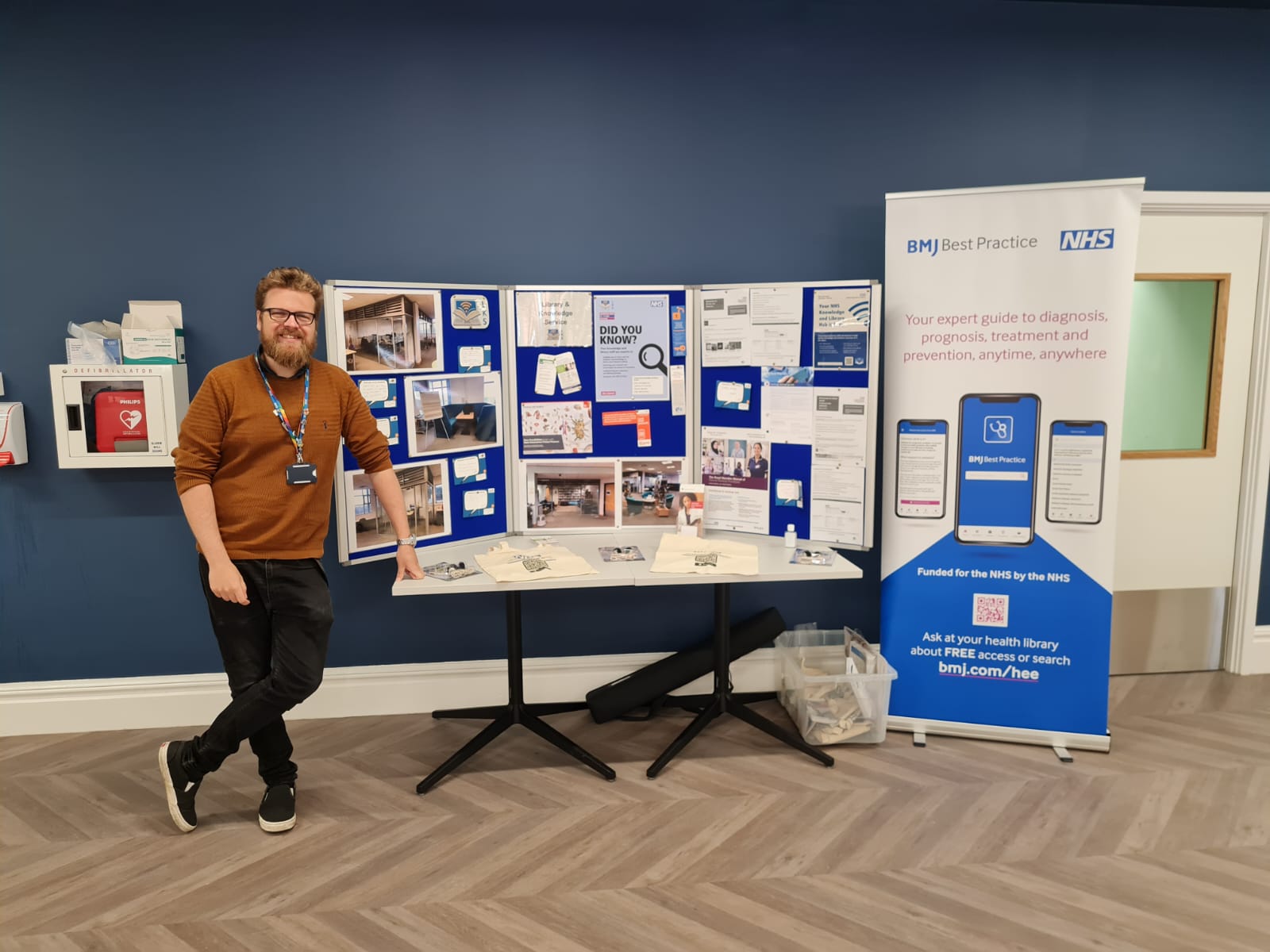
Pop-Up Library
It's Knowledge and Library Services National Awareness Week. Come along to our pop-up library today in the restaurant. Liam will be there to answer any questions this afternoon at 1.30pm until 2.30pm
Friday, 20 May 2022
WUTH publication: Partial tear of the distal biceps tendon: Current concepts
Citation: Journal of Orthopaedics. 2022, 32, 18-24
Author: Zaid Hamoodi , Joanna Winton, Vijaya Bhalaik
Abstract: Background: Patients with partial rupture of the distal biceps tendon can present with vague elbow pain and weakness. Understanding of the anatomy and aetiology of this disease is essential to management. Patients can present with a single or multiple traumatic events or with a chronic degenerative history. On clinical examination, patients will have an intact tendon making the diagnosis more challenging. Clinicians, therefore, should have a high index of suspicion and should actively look for this pathology.
Objectives and rationale: This review aims to discuss the current evidence in managing partial rupture of the distal biceps tendon with a suggested treatment algorithm.
Conclusion: Several clinical tests have been described in the literature including resisted hook test, biceps provocation test, and TILT sign. However, the diagnosis is usually confirmed by a magnetic resonance scan with the arm positioned in elbow flexion, shoulder abduction, and forearm supination and commonly known as FABS MR. Partial tendon tears that involve less than 50% of the tendon can be successfully managed conservatively. Tears that include more than 50% of the tendon are more likely to fail conservative management and would benefit from surgical intervention. It is crucial, however, to involve the patient in the decision making, which is based on their objectives and needs.
Keywords: Anatomy; Diagnosis; Distal biceps tendon; Management; Partial tear.
Monday, 16 May 2022
WUTH publication: Integrated care for optimizing the management of stroke and associated heart disease: a position paper of the European Society of Cardiology Council on Stroke
Citation: European Heart Journal. 2022 May 13, ehac245. Online ahead of print.
Author: Gregory Y H Lip, Deirdre A Lane, Radosław Lenarczyk, Giuseppe Boriani, Wolfram Doehner, Laura A Benjamin, Marc Fisher, Deborah Lowe, Ralph L Sacco, Renate Schnabel, Caroline Watkins, George Ntaios, Tatjana Potpara
Abstract: The management of patients with stroke is often multidisciplinary, involving various specialties and healthcare professionals. Given the common shared risk factors for stroke and cardiovascular disease, input may also be required from the cardiovascular teams, as well as patient caregivers and next-of-kin. Ultimately, the patient is central to all this, requiring a coordinated and uniform approach to the priorities of post-stroke management, which can be consistently implemented by different multidisciplinary healthcare professionals, as part of the patient 'journey' or 'patient pathway,' supported by appropriate education and tele-medicine approaches. All these aspects would ultimately aid delivery of care and improve patient (and caregiver) engagement and empowerment. Given the need to address the multidisciplinary approach to holistic or integrated care of patients with heart disease and stroke, the European Society of Cardiology Council on Stroke convened a Task Force, with the remit to propose a consensus on Integrated care management for optimizing the management of stroke and associated heart disease. The present position paper summarizes the available evidence and proposes consensus statements that may help to define evidence gaps and simple practical approaches to assist in everyday clinical practice. A post-stroke ABC pathway is proposed, as a more holistic approach to integrated stroke care, would include three pillars of management: • A: Appropriate Antithrombotic therapy. • B: Better functional and psychological status. • C: Cardiovascular risk factors and Comorbidity optimization (including lifestyle changes).
Keywords: Delivery of care; Heart disease; Integrated care; Patient pathways; Stroke.
Monday, 9 May 2022
WUTH publication: Safety of Bariatric Surgery in ≥ 65-Year-Old Patients During the COVID-19 Pandemic
Citation: Obesity Surgery. 2022 May 5, 1-13. Online ahead of print
Author: Rishi Singhal, Islam Omar, Brijesh Madhok, Yashasvi Rajeev, Yitka Graham, Abd A Tahrani, Christian Ludwig, Tom Wiggins, Kamal Mahawar, GENEVA Collaborators
Abstract: Background: Age ≥ 65 years is regarded as a relative contraindication for bariatric surgery. Advanced age is also a recognised risk factor for adverse outcomes with Coronavirus Disease-2019 (COVID-19) which continues to wreak havoc on global populations. This study aimed to assess the safety of bariatric surgery (BS) in this particular age group during the COVID-19 pandemic in comparison with the younger cohort.
Methods: We conducted a prospective international study of patients who underwent BS between 1/05/2020 and 31/10/2020. Patients were divided into two groups - patients ≥ 65-years-old (Group I) and patients < 65-years-old (Group II). The two groups were compared for 30-day morbidity and mortality.
Results: There were 149 patients in Group 1 and 6923 patients in Group II. The mean age, preoperative weight, and BMI were 67.6 ± 2.5 years, 119.5 ± 24.5 kg, and 43 ± 7 in Group I and 39.8 ± 11.3 years, 117.7±20.4 kg, and 43.7 ± 7 in Group II, respectively. Approximately, 95% of patients in Group 1 had at least one co-morbidity compared to 68% of patients in Group 2 (p = < 0.001). The 30-day morbidity was significantly higher in Group I (11.4%) compared to Group II (6.6%) (p = 0.022). However, the 30-day mortality and COVID-19 infection rates were not significantly different between the two groups.
Conclusions: Bariatric surgery during the COVID-19 pandemic is associated with a higher complication rate in those ≥ 65 years of age compared to those < 65 years old. However, the mortality and postoperative COVID-19 infection rates are not significantly different between the two groups.
Keywords: Metabolic surgery; Obesity; Older patients; Resuming elective surgery; SARS-CoV-2.
Monday, 25 April 2022
WUTH publication: Alterations of mucosa-attached microbiome and epithelial cell numbers in the cystic fibrosis small intestine with implications for intestinal disease
Author: Jennifer Kelly, Miran Al-Rammahi, Kristian Daly, Paul K Flanagan, Arun Urs, Marta C Cohen, Gabriella di Stefano, Marcel J C Bijvelds, David N Sheppard, Hugo R de Jonge, Ursula E Seidler, Soraya P Shirazi-Beechey
Abstract: Cystic fibrosis (CF) is caused by mutations in the cystic fibrosis transmembrane conductance regulator (CFTR) gene. Defective CFTR leads to accumulation of dehydrated viscous mucus within the small intestine, luminal acidification and altered intestinal motility, resulting in blockage. These changes promote gut microbial dysbiosis, adversely influencing the normal proliferation and differentiation of intestinal epithelial cells. Using Illumina 16S rRNA gene sequencing and immunohistochemistry, we assessed changes in mucosa-attached microbiome and epithelial cell profile in the small intestine of CF mice and a CF patient compared to wild-type mice and non-CF humans. We found increased abundance of pro-inflammatory Escherichia and depletion of beneficial secondary bile-acid producing bacteria in the ileal mucosa-attached microbiome of CFTR-null mice. The ileal mucosa in a CF patient was dominated by a non-aeruginosa Pseudomonas species and lacked numerous beneficial anti-inflammatory and short-chain fatty acid-producing bacteria. In the ileum of both CF mice and a CF patient, the number of absorptive enterocytes, Paneth and glucagon-like peptide 1 and 2 secreting L-type enteroendocrine cells were decreased, whereas stem and goblet cell numbers were increased. These changes in mucosa-attached microbiome and epithelial cell profile suggest that microbiota-host interactions may contribute to intestinal CF disease development with implications for therapy.
Thursday, 14 April 2022
WUTH publication: An Uncommon Presentation of Fracture-dislocation of the 4th and 5th Carpometacarpal Joints with Volar Displacement and its Management
Citation: Journal of Orthopaedic Case Reports. 2021, 11(9), 24-28
Author: Nikhil Jawaharlal, Vasanthakumar Ramsingh, Vijaya Bhalaik
Abstract: Introduction: Carpo-metacarpal joint fracture-dislocations are rare injuries. They constitute less than 1% of all hand injuries [1]. They often go unnoticed [2]. Of these, dorsal fracture-dislocations on the ulnar side are more commonly seen [3] because of the greater stabilizing dorsal structures. Volar fracture-dislocations are very rare and difficult to diagnose for which, one should have a keen eye on.
Case report: This is a case of a 51-year-old female with a closed injury to her wrist. With clinical suspicion and appropriate radiographs fracture-dislocation of the 4th and 5th carpometacarpal joints with volar displacement was diagnosed. She underwent closed reduction and percutaneous Kirschner wire fixation, followed by 6 weeks of immobilization. At the final follow-up in 4 months, the patient was noted to have a satisfactory outcome following intense physiotherapy.
Conclusion: Fourth and fifth carpometacarpal joint fracture-dislocations of the fingers are unique; their diagnosis can be challenging and often overlooked [4], which if missed can have very poor outcomes. The functional prognosis depends on the precocity of diagnosis and appropriate reduction and vigorous rehabilitation.
Keywords: Carpometacarpal joint; fracture-dislocation; volar displacement; wrist injury.
Tuesday, 12 April 2022
WUTH publication: Subspecialist abdominal wall reconstruction services in Canada
Citation: Canadian Journal of Surgery. 2022, 65(2), E264-E265
Author: Simon T Adams, Michael Harington
Abstract: SummaryRecent years have seen considerable increases in both the demand for, and complexity of, ventral hernia repairs. This has led to calls for abdominal wall surgery to become a recognized subspecialty in the United States and Europe, with some centres responding by forming specialized, multidisciplinary teams for abdominal wall reconstruction. At present, however, no Canadian city has followed suit. In this article, we outline the major arguments underlying the drive toward the centralization of complex abdominal wall services.
Thursday, 7 April 2022
WUTH publication: The British Orthopaedic Surgery Surveillance study: Perthes' disease: the epidemiology and two-year outcomes from a prospective cohort in Great Britain
Citation: The bone & joint journal. 2022, 104-B(4), 510-18
Author: Daniel C Perry, Barbara Arch, Duncan Appelbe, Priya Francis, Joanna Craven, Fergal P Monsell, Paula Williamson, Marian Knight, BOSS collaborators
Abstract: Aims: The aim of this study was to evaluate the epidemiology and treatment of Perthes' disease of the hip.
Methods: This was an anonymized comprehensive cohort study of Perthes' disease, with a nested consented cohort. A total of 143 of 144 hospitals treating children's hip disease in the UK participated over an 18-month period. Cases were cross-checked using a secondary independent reporting network of trainee surgeons to minimize those missing. Clinician-reported outcomes were collected until two years. Patient-reported outcome measures (PROMs) were collected for a subset of participants.
Results: Overall, 371 children (396 hips) were newly affected by Perthes' disease arising from 63 hospitals, with a median of two patients (interquartile range 1.0 to 5.5) per hospital. The annual incidence was 2.48 patients (95% confidence interval (CI) 2.20 to 2.76) per 100,000 zero- to 14-year-olds. Of these, 117 hips (36.4%) were treated surgically. There was considerable variation in the treatment strategy, and an optimized decision tree identified joint stiffness and age above eight years as the key determinants for containment surgery. A total of 348 hips (88.5%) had outcomes to two years, of which 227 were in the late reossification stage for which a hip shape outcome (Stulberg grade) was assigned. The independent predictors of a poorer radiological outcome were female sex (odds ratio (OR) 2.27 (95% CI 1.19 to 4.35)), age above six years (OR 2.62 (95% CI (1.30 to 5.28)), and over 50% radiological collapse at inclusion (OR 2.19 (95% CI 0.99 to 4.83)). Surgery had no effect on radiological outcomes (OR 1.03 (95% CI 0.55 to 1.96)). PROMs indicated the marked effect of the disease on the child, which persisted at two years.
Conclusion: Despite the frequency of containment surgery, we found no evidence of improved outcomes. There appears to be a sufficient case volume and community equipoise among surgeons to embark on a randomized clinical trial to definitively investigate the effectiveness of containment surgery. Cite this article: Bone Joint J 2022;104-B(4):510-518.
Keywords: Avascular necrosis; BOSS; Cohort; Epidemiology; Incidence; Legg-Calvé-Perthes; Legg-calve-perthes disease; Osteonecrosis; Patient-reported outcome measures (PROMs); Perthes; clinicians; cohort studies; epidemiology; hip disease; hips; orthopaedic surgery; radiological outcomes; randomized controlled trials.
Tuesday, 5 April 2022
WUTH publication: The British Orthopaedic Surgery Surveillance study: slipped capital femoral epiphysis: the epidemiology and two-year outcomes from a prospective cohort in Great Britain
Citation: The bone & joint journal. 2022, 104-B(4), 519-28
Author: Daniel C Perry, Barbara Arch, Duncan Appelbe, Priya Francis, Joanna Craven, Fergal P Monsell, Paula Williamson, Marian Knight, BOSS collaborators
Abstract: Aims: The aim of this study was to inform the epidemiology and treatment of slipped capital femoral epiphysis (SCFE).
Methods: This was an anonymized comprehensive cohort study, with a nested consented cohort, following the the Idea, Development, Exploration, Assessment, Long-term study (IDEAL) framework. A total of 143 of 144 hospitals treating SCFE in Great Britain participated over an 18-month period. Patients were cross-checked against national administrative data and potential missing patients were identified. Clinician-reported outcomes were collected until two years. Patient-reported outcome measures (PROMs) were collected for a subset of participants.
Results: A total of 486 children (513 hips) were newly affected, with a median of two patients (interquartile range 0 to 4) per hospital. The annual incidence was 3.34 (95% confidence interval (CI) 3.01 to 3.67) per 100,000 six- to 18-year-olds. Time to diagnosis in stable disease was increased in severe deformity. There was considerable variation in surgical strategy among those unable to walk at diagnosis (66 urgent surgery vs 43 surgery after interval delay), those with severe radiological deformity (34 fixation with deformity correction vs 36 without correction) and those with unaffected opposite hips (120 prophylactic fixation vs 286 no fixation). Independent risk factors for avascular necrosis (AVN) were the inability of the child to walk at presentation to hospital (adjusted odds ratio (aOR) 4.4 (95% CI 1.7 to 11.4)) and surgical technique of open reduction and internal fixation (aOR 7.5 (95% CI 2.4 to 23.2)). Overall, 33 unaffected untreated opposite hips (11.5%) were treated for SCFE by two-year follow-up. Age was the only independent risk factor for contralateral SCFE, with age under 12.5 years the optimal cut-off to define 'at risk'. Of hips treated with prophylactic fixation, none had SCFE, though complications included femoral fracture, AVN, and revision surgery. PROMs demonstrated the marked impact on quality of life on the child because of SCFE.
Conclusion: The experience of individual hospitals is limited and mechanisms to consolidate learning may enhance care. Diagnostic delays were common and radiological severity worsened with increasing time to diagnosis. There was unexplained variation in treatment, some of which exposes children to significant risks that should be evaluated through randomized controlled trials. Cite this article: Bone Joint J 2022;104-B(4):519-528.
Keywords: Avascular necrosis; BOSS; Cohort study; Epidemiology; Incidence; Patient-reported outcome measures (PROMs); SCFE; SUFE; Slipped capital femoral epiphysis; Slipped capital femoral epiphysis (SCFE); Slipped upper femoral epiphysis; avascular necrosis; clinicians; deformity; hip(s); open reduction and internal fixation; orthopaedic surgery; prophylactic fixation; randomized controlled trials.